
November 10, 2026
Fireclay: A Material Made to Last
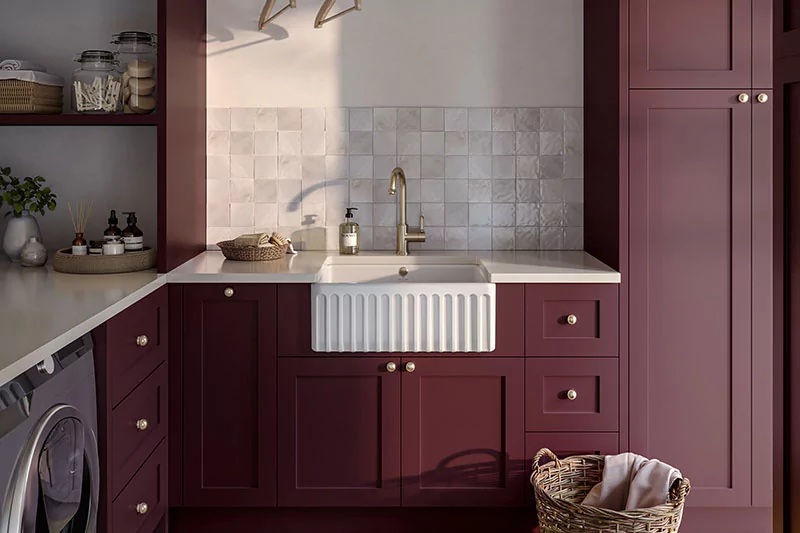
With so many materials and configurations available for today’s kitchen sink, from stainless steel and other metals to cast iron, composites and stone, fireclay has a presence all its own. Its smooth glazed surface, substantial feel and beautifully simple forms give it a distinctive character that can work just as easily in a traditional kitchen as in a more streamlined contemporary space. Its enduring appeal comes from a combination of craftsmanship, performance and a timeless quality that has allowed it to remain relevant through generations of changing kitchen design.
Fireclay begins with a carefully formulated blend of clay and minerals chosen for their ability to withstand extremely high temperatures. The mixture is shaped into the sink using molds, then slowly dried to remove moisture before a layer of glaze is applied. From there, the sink is fired in a kiln at temperatures that can exceed 2,000°F. During firing, the intense heat causes the clay particles to fuse together and become extremely dense and hard, a process known as vitrification. At the same time, the glaze bonds with the clay to create the smooth, glass-like surface associated with fireclay. The result is a solid, nonporous material particularly well suited to the demands of a hardworking kitchen.
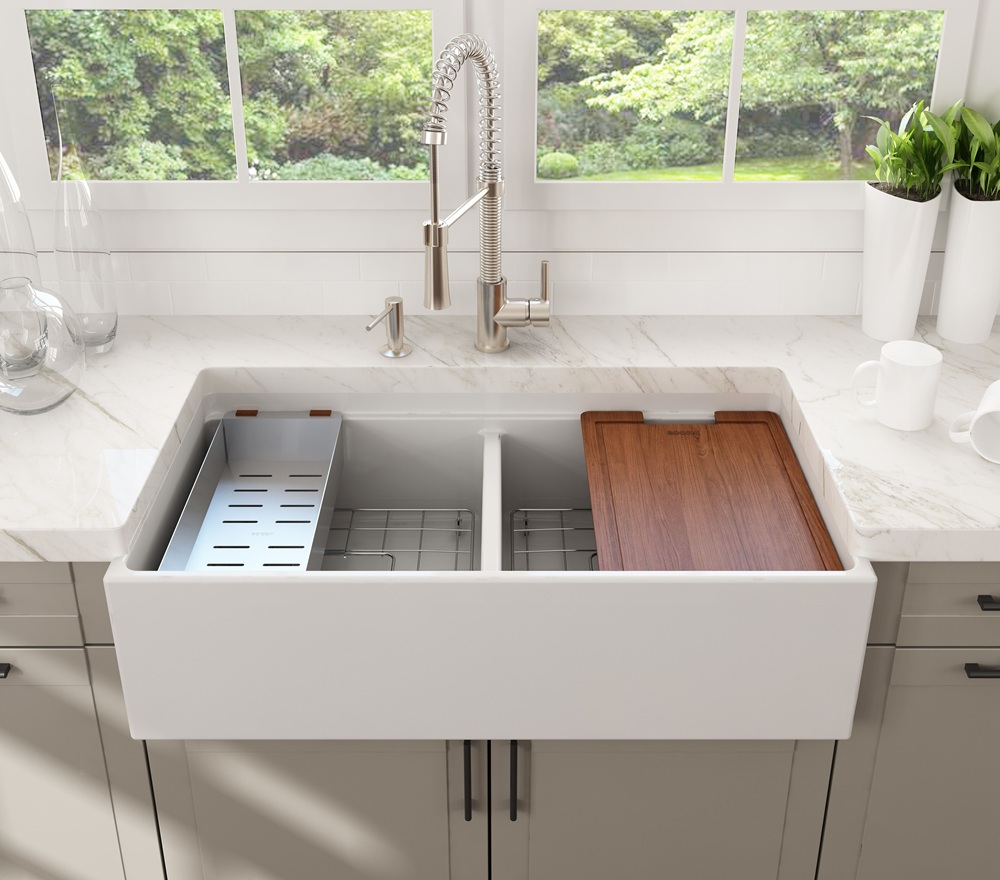
That construction translates into some very practical benefits. Fireclay stands up remarkably well to heat, staining, fading, scratching and everyday wear, while its nonporous glazed surface is easy to clean and maintain. While no sink material is completely impervious to damage, quality fireclay is made with long-term use in mind. Unlike materials whose durability depends primarily on a surface coating, much of fireclay’s strength comes from the transformation of the clay itself during firing. It is one of the reasons well-made fireclay sinks have earned such a longstanding reputation for quality and longevity.
Fireclay is often compared with enameled cast iron, since both have a substantial feel and beautifully glazed appearance, but their construction is quite different. A cast-iron sink begins with a heavy iron body covered with enamel, while fireclay is ceramic throughout. Both can be exceptional, long-lasting choices, but fireclay contains no metal core that can rust if the surface is ever deeply damaged. The manufacturing process also gives fireclay a character quite different from a sink stamped or fabricated from metal. Forming, drying, glazing and firing a large piece of clay takes time, and traditionally produced pieces can have subtle variations inherent to the process. Perhaps the best example at DJ Bath Plus is Shaws, part of the House of Rohl portfolio. Shaws has been making its iconic fireclay sinks in England since 1897, and its sinks continue to be handcrafted using traditional methods, a manufacturing history that has now been tested through well over a century of use.
One of the most interesting things about fireclay today is how far the category extends beyond the classic white farmhouse sink. Shaws and ROHL remain closely associated with the traditional English fireclay aesthetic, while BOCCHI takes the material in a wider range of directions, from apron-front designs to undermount, dual-mount and even workstation configurations. Its expanded palette, including matte black, grays, biscuit and more distinctive colors, opens up additional possibilities for designers as well. BLANCO has also interpreted fireclay through designs such as CERANA and PROFINA, combining the material’s traditional character with more contemporary details. CERANA offers a reversible apron with different corner treatments, while PROFINA incorporates an accessory ledge for added functionality.
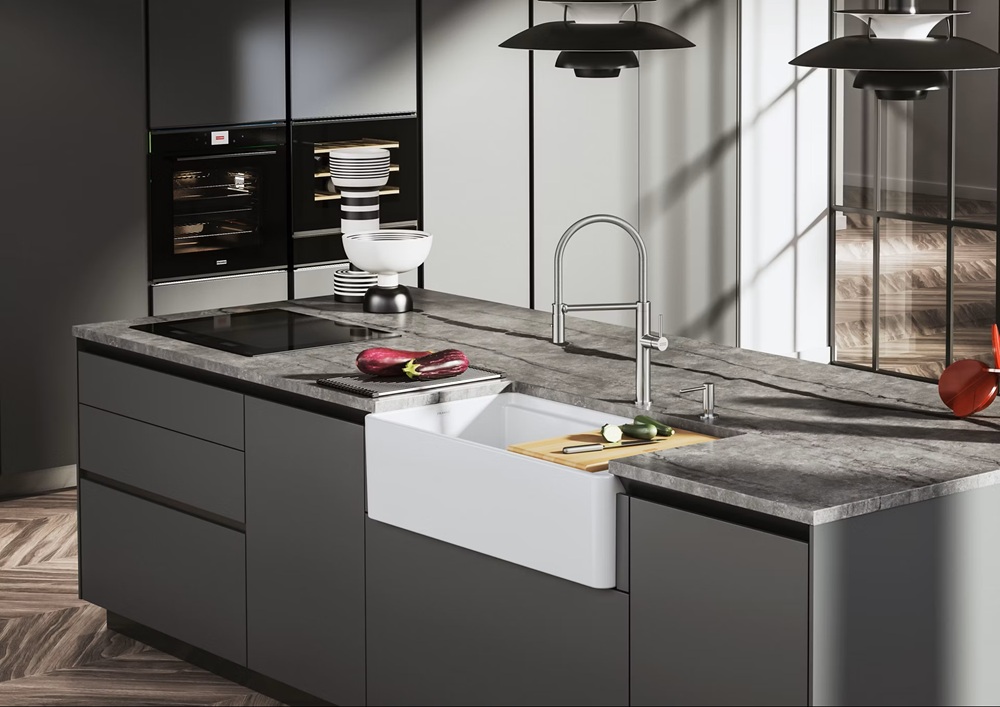
That variety of offerings also makes fireclay particularly well suited to the increasingly layered way kitchens are designed today. A generous apron-front model can serve as the primary sink and a defining focal point of the room, bringing material, texture and architectural presence to the cabinetry around it. Smaller and more streamlined designs can integrate beautifully into a prep area, kitchen island, wet bar, beverage station or butler’s pantry, adding the same durability and quality in a more subtle way. In kitchens designed with multiple work zones, this flexibility gives designers the opportunity to carry the character of fireclay throughout the space while choosing a size and installation style appropriate to each function. With today’s range of apron-front, undermount, dual-mount and smaller-format designs, fireclay can be every bit as practical as it is beautiful.
For us at DJ Bath Plus, that balance between heritage and versatility is what makes fireclay particularly interesting. Fireclay feels substantial without needing to be showy, and its timeless glazed surface pairs beautifully with everything from polished nickel and chrome to brass and darker faucet finishes. Ultimately, it is a material that has managed to evolve without losing the qualities that made it successful in the first place.