
October 5, 2026
Mr. Steam - Health is the new wealth
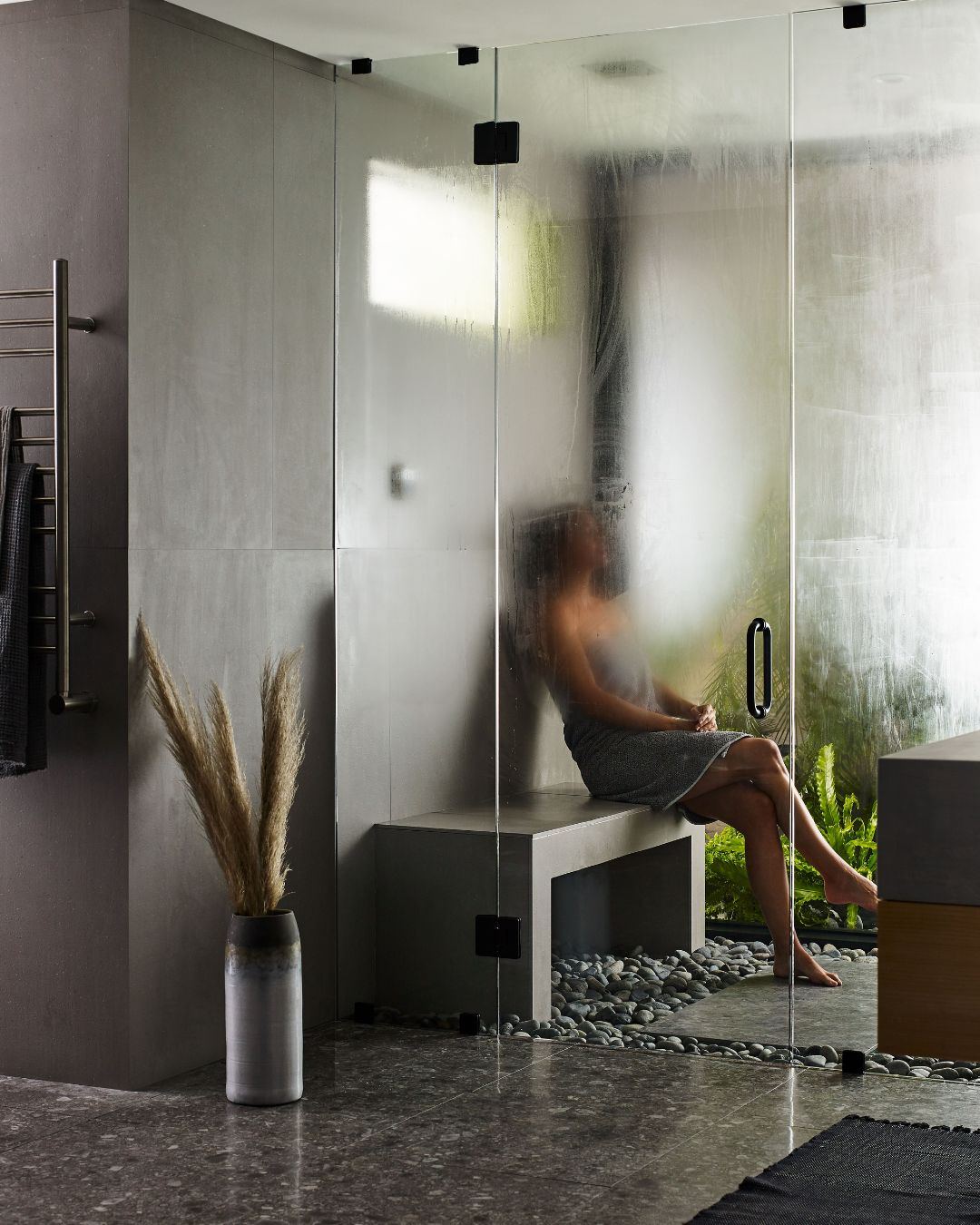
Long before “wellness” became the plumbing industry’s dominant marketing jargon, steam therapy was already embedded in cultures around the world. Today, steam has become part of a larger conversation about longevity, emotional well-being, recovery, and the role the home plays in supporting daily health. And few companies have witnessed that evolution as closely as Mr. Steam . And according to Vice President of Sales Dan Reinert, the current wellness movement did not create steam’s relevance, rather it simply amplified what steam has always offered. “There’s always terms in our industry that catch on for a while,” Reinert explains. “But wellness, we’ve been preaching wellness for a long time.”
That awareness has expanded beyond traditional definitions of luxury. Wellness is no longer viewed as a reactive purchase or occasional indulgence. It has become proactive and deeply personal. Consumers are increasingly investing in spaces and rituals that support long-term health rather than temporary escape. As Reinert puts it, “Health is the new wealth.”
For designers, architects, and builders, bathrooms are no longer functioning solely as utilitarian spaces. Entire wellness suites are now being incorporated into custom homes, complete with steam, sauna, cold plunge, exercise rooms, purified air systems, and recovery zones. “We used to say you could put steam in your shower,” Reinert says. “Now people are taking it a step further. They’re creating a specific wellness suite in the home.”
With wellness effectively becoming a third category, alongside kitchen and bath, the home spaces being designed today are expected to support not only physical function and aesthetics, but emotional and mental well-being as well. Steam occupies a uniquely powerful role within this category because it engages nearly every sense simultaneously. Through heat, humidity, aromatherapy, chromatherapy, sound integration, and lighting control, steam experiences bridge both physical and emotional wellness in ways few plumbing categories can. “I think the only thing we don’t do is taste,” Reinert jokes.
But behind the humor is a serious point: modern consumers increasingly expect immersive, sensory-driven environments. Social media has accelerated that expectation dramatically, normalizing spa-inspired interiors and exposing homeowners to sophisticated wellness design ideas that once belonged exclusively to luxury hospitality. Designing for wellness has also exposed an important challenge within the industry: education. For Reinert, empowering specifiers with technical confidence is critical to the future growth of wellness design. Through educational initiatives and industry programs like Design Hounds and Camp Feel Good, Mr. Steam has focused heavily on closing the knowledge gap.
As wellness technologies become more sophisticated, designers will need to understand the role of individual components in creating a customized wellness experience for clients. Steam systems extend far beyond a basic steam generator. Mr. Steam’s integrated offerings can include touchscreen controls, mobile app activation, chromatherapy lighting, aromatherapy infusion systems, and audio elements to create a fully customized steam experience tailored to the mood, recovery, or relaxation goals of each client.
Reinert even envisions a near future where wellness technology becomes predictive and responsive through AI integration. “You had a stressful day? Let me put the lights on blue, turn on spa music, and add lavender essential oil,” he says. “Or if you just finished a workout, maybe the system creates a more energizing environment.”
While that level of personalization once sounded futuristic, many of those technologies already exist in adjacent categories. Consumers are now accustomed to wearable wellness devices, biometric tracking, and app-driven environments. The next evolution is integrating those systems into the architecture of the home itself. Still, despite rapid advances in technology, Reinert believes the true value of steam remains deeply human. “People need time to decompress and recharge,” he says. “That’s what you get out of steam and sauna.”
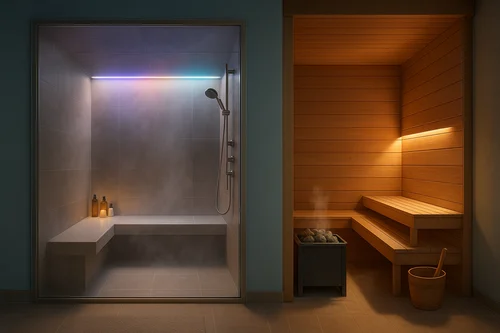
That human-centered perspective may ultimately explain why steam resonates so strongly within today’s wellness movement. At a time when life feels increasingly digital, overstimulated, and fast-moving, steam offers something surprisingly simple: stillness. It encourages ritual within the home. It prioritizes intentional pauses. It supports recovery after exercise, relief during illness, respiratory comfort, muscle relaxation, sleep support, and emotional decompression. “There’s so many good stories when it comes to steam,” he says.
Perhaps that is the industry’s greatest opportunity moving forward. Wellness is no longer a niche conversation. It is influencing architecture, specification, construction, and homeowner priorities at every level. The challenge now is not convincing consumers that wellness matters — it is helping them understand how seamlessly it can be integrated into daily life.
For showrooms and specifiers, that means asking better questions during the design process: How does the client recharge? What does their daily routine look like? What recovery rituals already exist in their lifestyle? What spaces in the home are being designed not just for function, but for restoration? And in that conversation, steam continues to prove that one of the oldest wellness traditions in human history may also be one of the most relevant for the future of residential design.
Steam’s true value is deeply human, providing a necessary space to decompress. Steam offers stillness and supports daily health rituals—from exercise recovery and respiratory comfort to muscle relaxation and emotional decompression.
With wellness now shaping architecture and homeowner priorities at every level, the challenge is showing how seamlessly steam integrates into daily life. Showrooms and specifiers must ask clients how they recharge to design spaces for restoration. Ultimately, steam proves that an ancient tradition remains vital to the future of residential design.