
October 5, 2026
Timeless by Design: Why Barber Wilsons Continues to Define Enduring Luxury
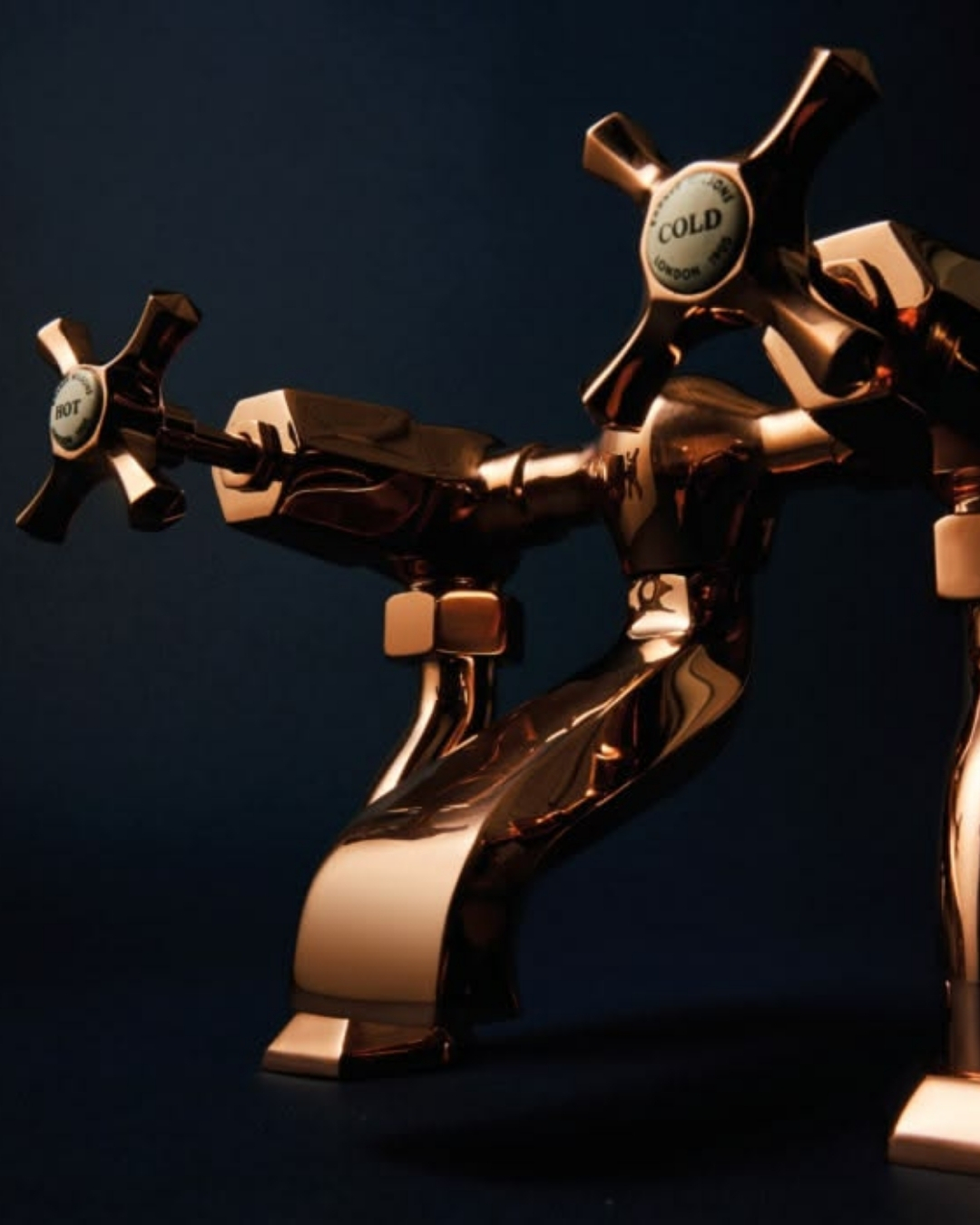
In an industry that often highlights what's new, Barber Wilsons has built its reputation by refining what endures. For nearly 130 years, the English manufacturer has produced solid brass plumbing fittings that have become synonymous with craftsmanship, engineering, and timeless design. Still manufacturing in England and still committed to traditional methods of production, Barber Wilsons occupies a distinctive place in the luxury plumbing industry: one defined not by changing trends, but by an unwavering belief that exceptional design should remain relevant for generations.
That philosophy becomes immediately apparent in conversation with Sarah Jenkinson, whose years representing Barber Wilsons have given her a unique perspective on the company's history, evolution, and enduring appeal among architects and interior designers.
Ask Sarah about the renewed appreciation for timeless interiors and she begins, somewhat unexpectedly, with fine china. Her parents owned a china and glass shop, and when she was younger, her mother cautioned her against choosing a pattern simply because it was fashionable. Trends disappear, patterns are discontinued, and suddenly something intended to last a lifetime becomes outdated.
Plumbing, Sarah argues, isn't all that different. "I can walk into a bathroom and tell you within two years what year the bathroom was done," she says of many highly contemporary spaces. And while there's nothing inherently wrong with embracing a particular moment in design, Sarah points out that the way homeowners think about their homes is changing. Increasingly, they're investing with longevity in mind.
"For most people, this is the house. This is their forever house," she says. "Bathrooms in particular are an expensive thing to redo. So you want something that is timeless, that doesn't date." It's an idea that feels especially relevant when specifying plumbing. Faucets and valves aren't simply decorative objects. They're among the most frequently touched and relied-upon elements in a home, expected to perform day after day while remaining visually relevant as the room and lives around them evolve.
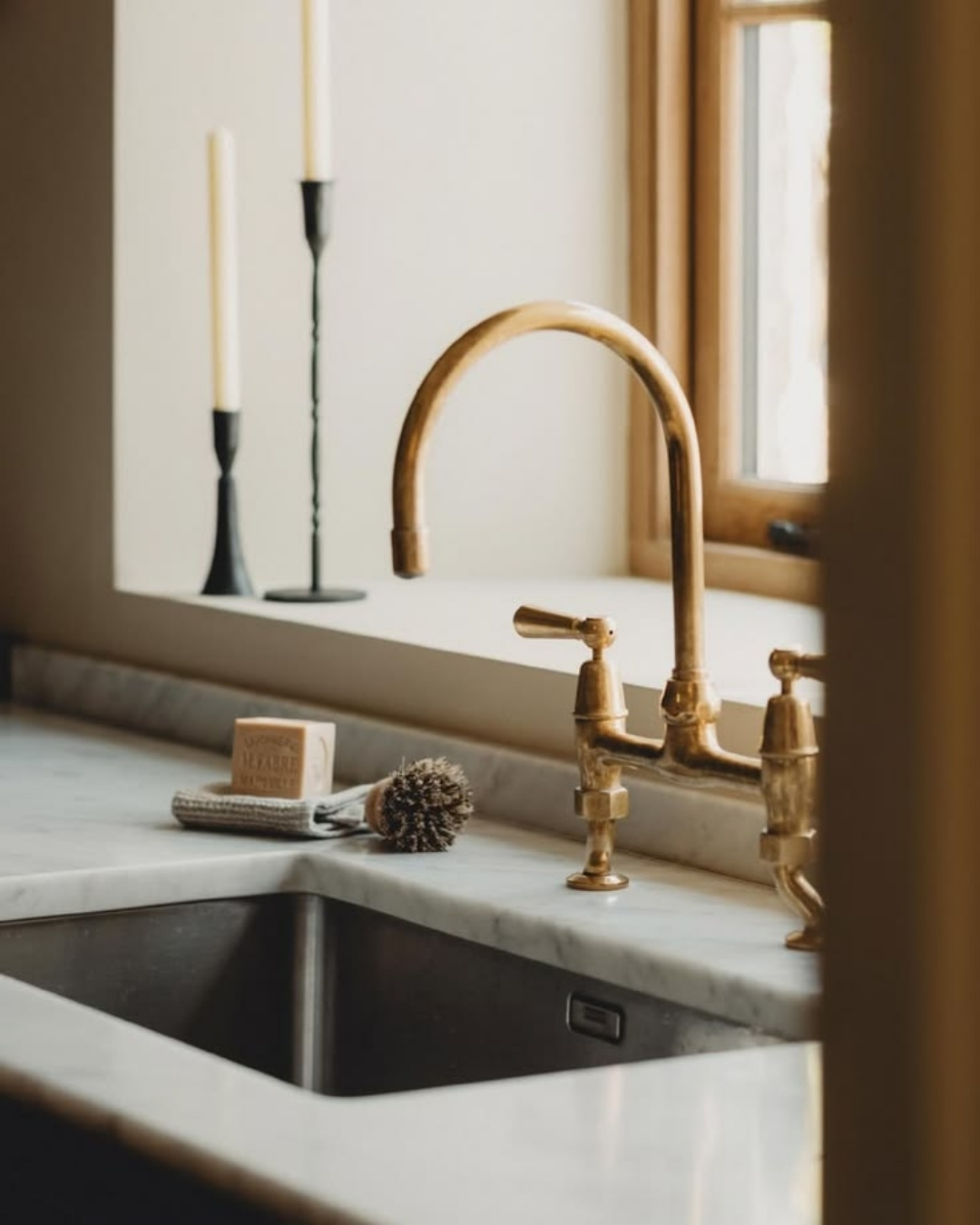
Barber Wilsons approaches that responsibility with unusual restraint. The company isn't trying to offer hundreds of handle designs or respond to every emerging finish trend. Instead, its collections are rooted in recognizable forms and proportions that have already demonstrated their ability to endure.
The Regent Collection draws from late-Victorian and early-20th-century design, while Mastercraft carries the influence of its Art Deco origins. Basin and kitchen faucets, bridge configurations, bath fillers, exposed and concealed shower fittings, thermostatic valves and other components allow that design language to extend throughout a project rather than stop at the sink.
And although Barber Wilsons' heritage is unmistakably traditional, Sarah is quick to challenge the idea that traditional design belongs only to traditional interiors. "You go into a Barber Wilson bathroom, you can't tell what year it was done. Not from the faucets," she says. "You might be able to tell from the sink, the tub, the tile, but you can't tell from the faucets."
Perhaps nothing illustrates Barber Wilsons’ ethos better than the fact that the manufacturer can go decades without feeling compelled to announce an entirely new aesthetic direction. Sarah recalls that when the company developed its more contemporary[1] [2] [3] Milne range, released in 2024, it represented its first truly new design direction in decades. That isn't because Barber Wilsons is opposed to change. It's because the company sees little value in creating something simply to participate in a trend.
"We've never really wanted, 'Oh, that's a pretty faucet. Let's make our version of it,'" Sarah explains. "We've always preferred to say, 'This is what we make. We do it extremely well. If you like it, great. If you don't, we're not offended.'" It's an unusually straightforward philosophy in a market where constant introduction can sometimes become synonymous with innovation.
The Milne collection provides a different kind of evolution, one that takes the familiar principles of Barber Wilsons - proportion, ergonomics, substantial materials and mechanical integrity - and moves them into a cleaner design vocabulary. Sarah deliberately avoids describing it as transitional. "I don't like the word transitional. I like the word evolutionary, because you can see where it came from and you can see where it's going."
That distinction is important. Transitional design can imply something occupying the space between two styles. Evolution, however, suggests continuity. For Barber Wilsons, the past isn't something to abandon in order to move forward. It's the starting point.
That continuity extends across a product offering that is broader than many designers initially realize. Barber Wilsons is perhaps best known for its distinctive basin, bath and kitchen brassware - the bridge faucets, cross handles, lever handles and substantial bath fittings that immediately communicate the company's British heritage - but the portfolio reaches considerably further. There are wall and deck-mounted basin fittings, monobloc mixers, bath fillers, hand showers, exposed and concealed shower systems, thermostatic controls and kitchen faucets, as well as coordinated bathroom accessories.
There is another characteristic of Barber Wilsons that is difficult to communicate through the catalog alone: weight. Pick up one of the company's valves and the difference is immediate. Sarah describes the products as essentially commercial-grade fittings that happen to be beautiful. Their substantial brass construction creates a physical sense of permanence, something she believes matters when asking a client to invest at this level.
"If you're going to be expensive, be reassuringly expensive," she says. "Have them pick it up and feel it and go, 'I understand why this is expensive because I can feel it when I pick it up.'" The tongue-in-cheek remark is very Sarah, but the point is serious. Luxury can be communicated through styling and branding. Quality has to exist in the object itself.
Barber Wilsons still combines skilled handwork with modern manufacturing. CNC equipment has a role, but so do the craftspeople who machine, polish, assemble and finish the products. As Sarah puts it, eventually "there's a man in an overall [who] takes over."
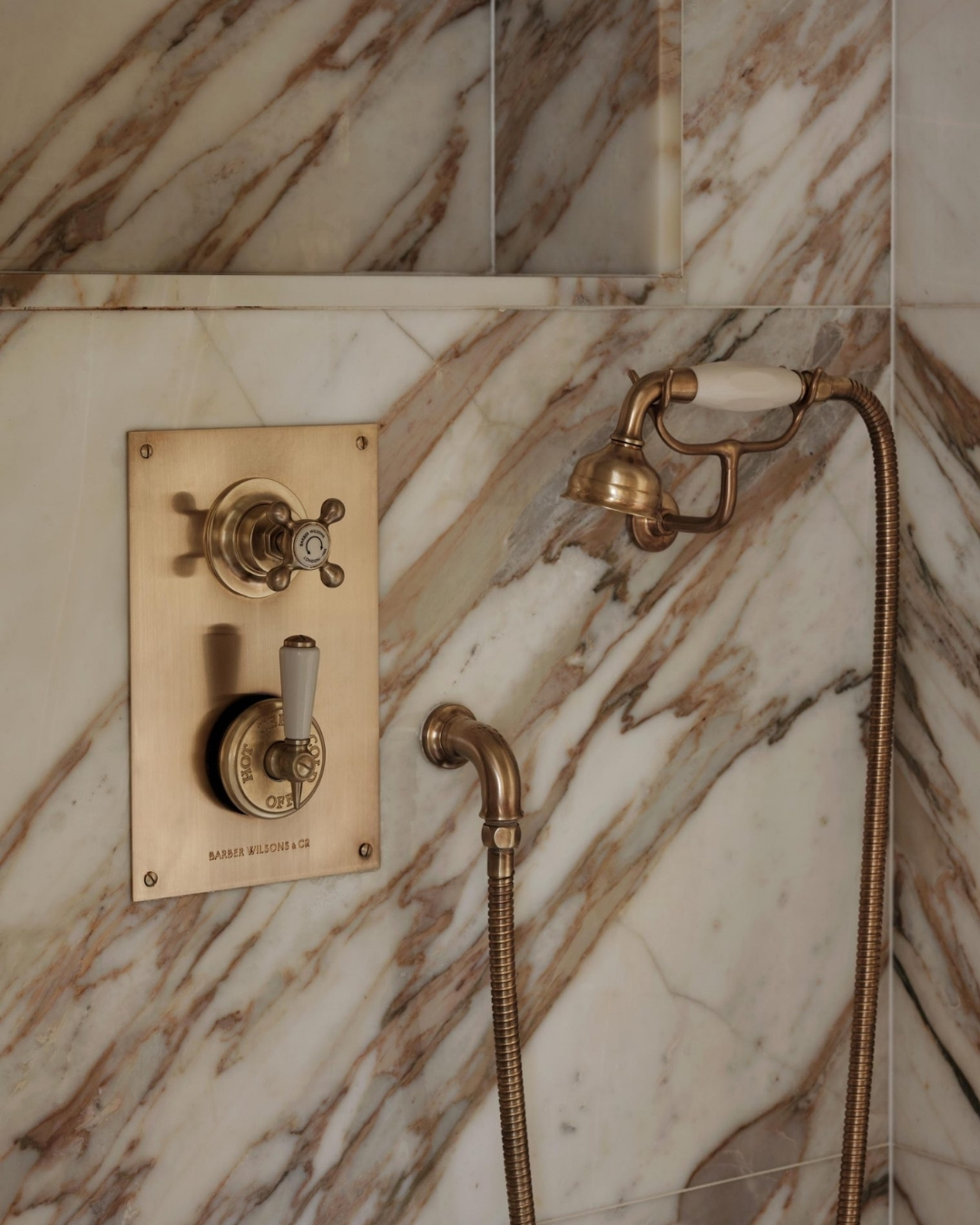
That human element remains visible throughout the company's manufacturing philosophy. The Crawley Road factory has been part of Barber Wilsons' history since the beginning, carrying traces of more than a century of production even as manufacturing methods around it have evolved. For designers accustomed to products that may be designed in one country, manufactured in another and assembled somewhere else entirely, that constancy offers something increasingly uncommon: a direct relationship between the identity of the brand and the people who make its products.
That relationship also helps explain a word frequently associated with British luxury manufacturing: bespoke. In contemporary design language, bespoke and custom are often used interchangeably. Sarah makes an important distinction. "People think bespoke means custom," she says. "No. Bespoke means it was made for you." She continues: "All of our products are bespoke, which means it's not just taken off the shelf and handed to you. When you place your order, that faucet is then made for you."
It's a subtle but meaningful difference. Bespoke, in Sarah's explanation, describes the underlying way Barber Wilsons already manufactures. The fitting is made in response to an order. It isn't simply pulled from a shelf and placed in a box.
Custom typically suggests modifying an existing product to create something unique: changing dimensions, developing a special component or producing something outside the standard offering. Barber Wilsons can still accommodate certain modifications - including relatively straightforward adjustments such as specialized plates for concealed thermostatic valves - but true one-off fabrication becomes considerably more involved when a craftsman is physically machining solid brass.
That also means patience remains part of the process. "These things do not grow on trees," Sarah jokes. "They have to be made."
The same balance between tradition and choice appears in Barber Wilsons' extensive finish offering. Polished and brushed brass sit alongside polished, satin and brushed nickel; polished, satin and brushed chrome; weathered and matt bronzes; gold finishes; Inca finishes; and stable options such as Enduring Matt Bronze and Enduring Black.
Importantly, Barber Wilsons differentiates between finishes intended to evolve (living finish) and those designed to retain a more consistent factory appearance. Unlacquered polished brass, for example, naturally patinates with age, allowing the fitting to develop alongside the room itself. Other finishes provide greater stability for designers and clients who prefer to preserve the original appearance. It's another form of longevity, not insisting that every product remain frozen in the condition in which it left the factory, but recognizing that materials can age beautifully when they're designed to do so. And despite the breadth of choices, Sarah says the majority of specifications continue to concentrate around a smaller group of enduring finishes. She sees that as further evidence that offering more isn't necessarily the same as offering better.
Few stories capture that philosophy of longevity as beautifully as one Sarah tells about Queen Elizabeth II and a bathtub at Sandringham.
In February 2022, only months before the Queen's passing, the Barber Wilsons factory received a call. The Queen is having difficulty turning the handle on her bath fitting when she wants to add a little hot water.
Two Barber Wilsons craftsmen are sent to Sandringham to investigate.
The Queen, much to their simultaneous delight and nervousness, wants to watch.
As the fitting comes apart, the craftsmen discover something remarkable: the bath set dates to the 1930s, installed during the reign of her father, King George VI.
And the component they need is something no service van is likely to carry in 2022: horsehair packing.
One of the men calls his grandfather, who had also worked for Barber Wilsons, to ask whether he remembers where any might still exist. He does. The material is located and rushed to Sandringham. The fitting is repaired. "So this nearly 100-year-old faucet," Sarah says, "the only thing wrong with it was the horsehair packing."
It's difficult to imagine a better expression of what longevity actually means. The craftsmen don't arrive to tell the homeowner, Queen or otherwise, that the faucet is obsolete. They arrive to fix it.
That idea of serviceability comes up repeatedly with Sarah and Barber Wilsons. Components can be serviced. Parts can be replaced. In certain applications, Barber Wilsons even retains compression options alongside ceramic-disc technology, giving designers and homeowners choices based on the conditions in which the product will actually operate.
The company also continues to refine existing products when an improvement genuinely makes them better.Sarah points to a recent change to a kitchen faucet that begins with feedback from a plumber. A multi-piece connection could eventually develop wear, and the installer proposes a wonderfully simple solution: why not make it one piece? Barber Wilsons listens. "Sometimes we go, 'Why did we not think of this? It's so simple. Why did we not think of this?'"
So the component is redesigned. For Sarah, that's what innovation should look like. "If you can't improve, what's the point?" she says. Changes that make a product easier to install, easier to service or more reliable move the company forward without requiring Barber Wilsons to reinvent itself. That might be one of the simplest explanations for why Barber Wilsons remains relevant.
There is beauty in the proportions. There is history in the designs. There is pleasure in choosing among polished nickel, aged brass or a deep bronze finish. But underneath all of it is engineering. And for designers, that combination offers something valuable: confidence.
Confidence that a fitting isn't designed around a momentary trend. Confidence that the material feels as substantial as it looks. Confidence that a collection can move between a historic residence and a newly built home without becoming a costume. Confidence that the product can be maintained rather than automatically discarded when something eventually wears.
And perhaps most importantly, confidence that Barber Wilsons knows exactly what it is. In an industry where newness often commands the most attention, Barber Wilsons offers a compelling counterpoint. The company continues to evolve, but it doesn't chase. It expands, but selectively. It embraces new engineering when it makes the product better, while preserving the craftsmanship and design language that have carried the company across generations. That restraint may ultimately be its greatest luxury.
More than a century after Barber Wilsons began making brassware in London, its faucets continue to appear in extraordinary hotels, private residences and thoughtfully designed bathrooms around the world, not because they capture a particular moment, but because they were never designed for only one.
They are made to become part of the architecture, part of the home and, occasionally, part of the family history. And that's a very different definition of timeless.